
Cross-pavement EV charging for homes without a driveway
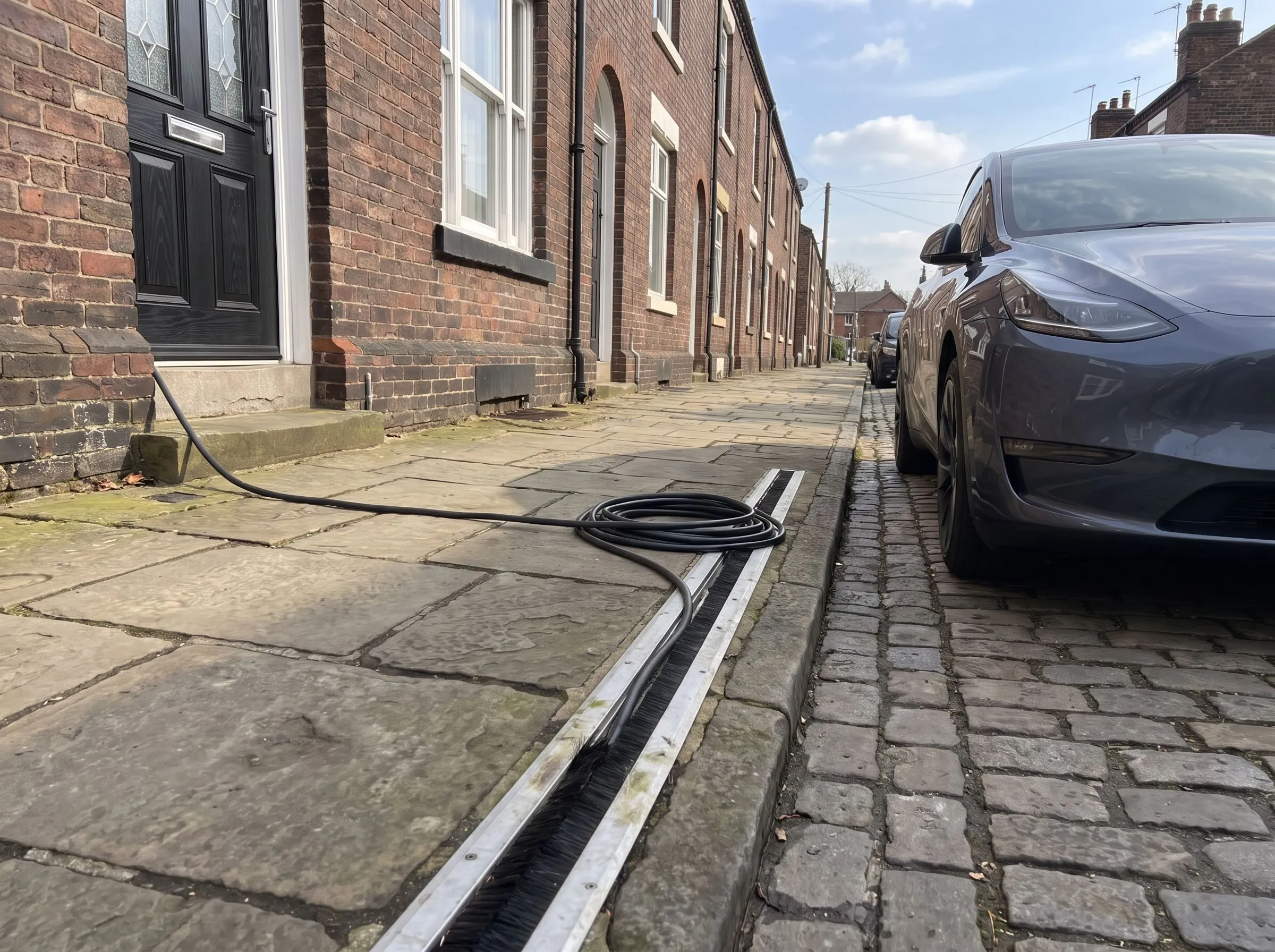
Cross-pavement EV charging uses a flush channel in the pavement to carry your cable safely from the house to the car. Home-tariff charging on a terraced street where your council allows it, with the application handled and the £500 on-street grant claimed for you.
Charge on your own tariff, without a driveway
Around a third of UK homes have no off-street parking, and public charging costs three to four times home rates. A cross-pavement channel closes that gap: a narrow tray cut flush into the pavement carries your cable from the house to the kerb, safely under the surface.
You charge overnight on a cheap EV tariff like any driveway household, the pavement stays clear for everyone, and the whole setup is yours rather than shared with the street.
EV charging for a terraced house: how it works
Channels suit Victorian and Edwardian terraces where you park outside your own front door. Where the council allows them, the setup is the same every time.
Charger on the front wall
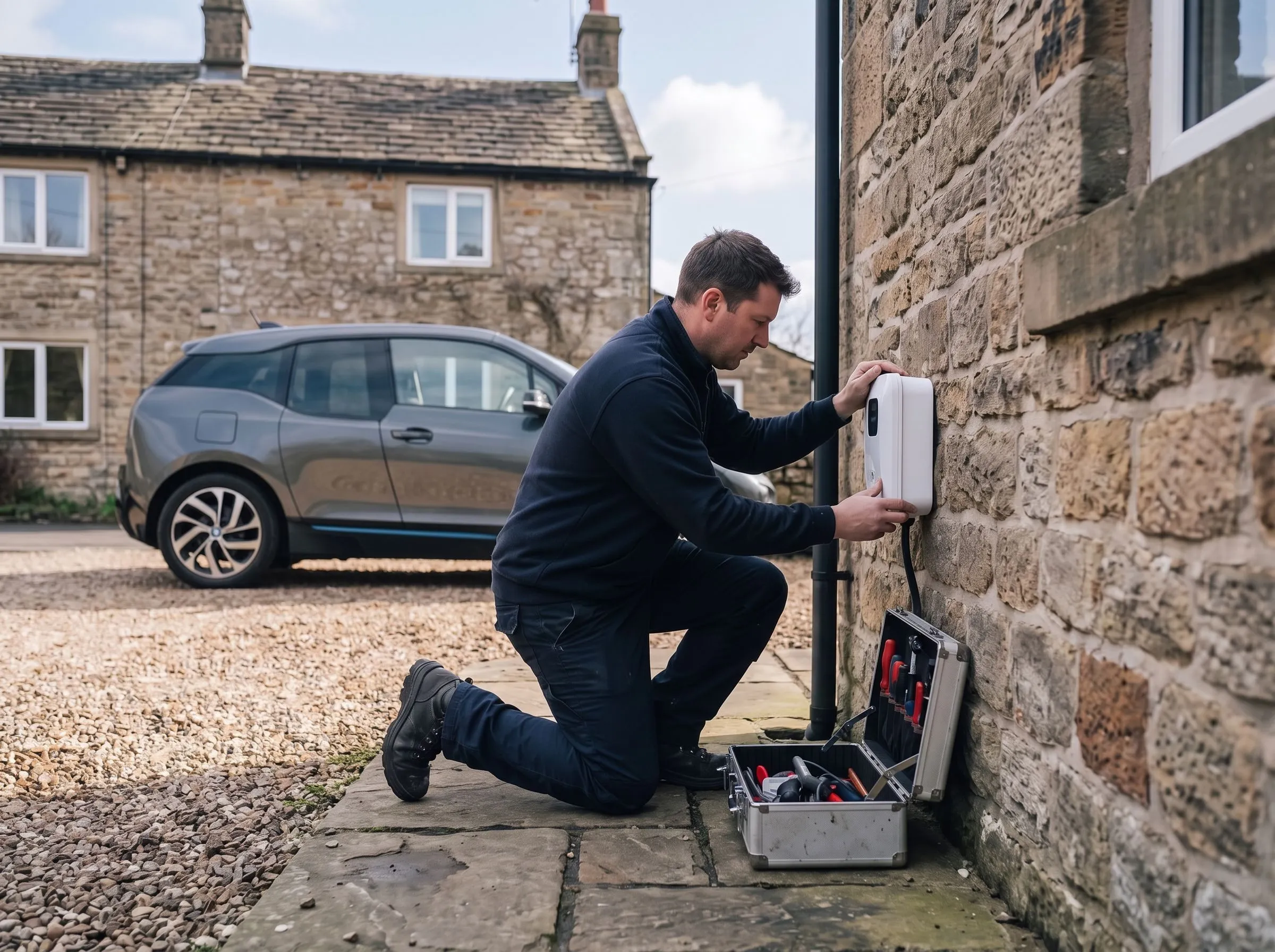
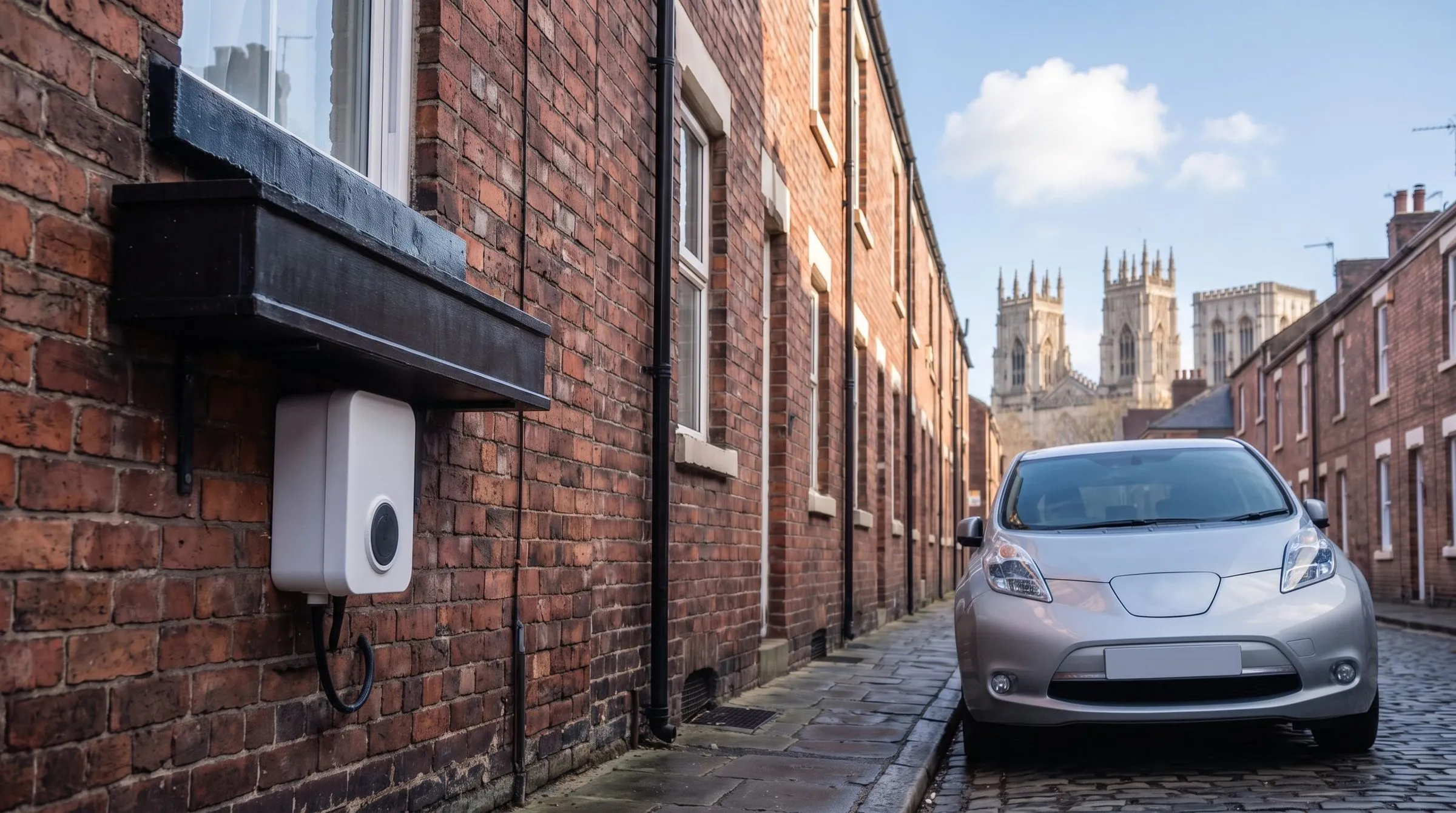
A standard 7kW smart charger, the same units we fit on driveways, mounted beside the front door or under the bay window, wired back to your consumer unit.
Channel across the pavement
A flush channel from the wall to the kerb, cut into the pavement and finished level with the surface. The cable sits in it under a cover and lifts out when you charge.
Park, plug in, charge overnight
Park outside, run the cable through the channel, plug in and charge on your night-rate tariff. In the morning the cable goes back inside and the pavement is clear.
Rear lanes work too
Tyneside flats and terraces with rear-lane parking often suit a charger on the back wall instead, with no pavement involved at all. We tell you which at the survey.
Where cross-pavement charging is allowed in our area
The pavement belongs to the council, so it decides whether a channel can go in. Positions across North Yorkshire and the North East differ a lot. Checked 7 October 2026.
Sunderland City Council
Trial runningSunderland
The council is trialling Kerbo Charge cross-pavement channels at a reduced cost to residents, with plans to make them available across the city.
Contact: evcharging@sunderland.gov.uk
Source: Kerbo Charge: Sunderland goes live ›Durham County Council
Scheme in progressDurham, Chester-le-Street, Bishop Auckland, Spennymoor
The council offers cross-pavement charging for residents who park on the street, and asks you to contact its cross-pavement team first.
Contact: EVCrossPavementSolutions@durham.gov.uk
Source: Durham County Council: electric vehicles ›Newcastle City Council
Scheme in progressNewcastle
The council is developing a cross-pavement pilot, backed by £1.2 million the North East Mayor secured from the Cross Pavement Charging Fund, and will take applications once it launches.
Source: Newcastle City Council: electric vehicles ›Middlesbrough Council
No published policyMiddlesbrough
The council hasn’t published a policy on cross-pavement charging, so we ask its highways team in writing before quoting a channel.
Source: Middlesbrough Council: highway licences ›Stockton-on-Tees Borough Council
No published policyStockton-on-Tees, Yarm, Ingleby Barwick, Thornaby, Billingham
The council doesn’t allow cables across the pavement in residents’ parking zones. Elsewhere there’s no published policy, so we ask in writing before quoting.
Source: Stockton-on-Tees Borough Council: RPZ permits ›City of York Council
Not allowedYork
The council doesn’t allow charging cables across the pavement, including gully channels, cable protectors and ramps.
Source: City of York Council: public EV charging strategy ›North Yorkshire Council
Not allowedHarrogate, Ripon, Northallerton, Thirsk, Knaresborough
The council doesn’t currently allow it. It is trialling cross-pavement solutions, but expressions of interest are closed and may reopen later.
Source: North Yorkshire Council: electric vehicle charging ›Darlington Borough Council
Not allowedDarlington
The council’s EV charging policy (February 2025) doesn’t allow cables to run across, through or over the highway from a home.
Source: Darlington Borough Council: EV charging policy (PDF) ›Redcar & Cleveland Borough Council
Not allowedRedcar, Guisborough, Saltburn
The council advises against trailing cables across the pavement or road, even with a protective cover, and points residents to public chargers.
Source: Redcar & Cleveland Council: Greener Future ›No channel where you live? A charger can usually go in a rear yard, a garage or a back-lane space instead, and renters or flat owners with their own parking can still claim the £500 chargepoint grant. Read our guide to EV charging with no driveway ›
How cross-pavement charging works
Photo survey & council application
Send photos of your street, pavement and parking. We check the pavement suits a channel, quote a fixed price, and prepare the application to your council’s highways team. Permission has to be granted before anything else happens.
Grant application, then the channel
With council permission in hand you submit the short £500 grant application, which we walk you through. Once approved, we cut and fit the flush channel across the pavement, level with the surface and safe to walk, push a pram or wheel over.
Charger install & handover
We fit your home charger, run the cable route to the channel, certify and DNO-notify the work, then submit the grant claim so the deduction is already on your invoice.
Who qualifies for the £500 on-street grant
The EV chargepoint grant has a dedicated route for households with on-street parking. The main tests are no off-street parking, a permanent channel, and council permission before you apply.
You can claim if
- You own or rent the home you live in, and it has no driveway, garage or allocated parking space
- You have lawful on-street parking outside or near the property
- Your council’s highways team has given permission for a permanent channel
- You own an eligible electric or plug-in hybrid, lease one for at least six months, or have one on order
- The charger is fitted by an OZEV-authorised installer, like us
You can't claim if
- You have private off-street parking of any kind, even if you rarely use it
- You want to use a cable mat, ramp or cover rather than a permanent channel
- The council has refused permission for your stretch of pavement
- The charger was installed before your grant application was approved
What cross-pavement charging costs
Two parts, priced honestly. The charger is the same fixed, fully-fitted price as any home install, £916–£1,142 depending on the unit, and on-street households get the£500 grant taken off that. The channel and any council fee are quoted separately, because the grant covers the chargepoint only and the channel depends on your pavement.
You get one fixed price for the whole job before anything is booked, with the grant already deducted. Nothing is added on the day.
Full EV chargepoint grant eligibility ›EV charger installation across North Yorkshire & the North East
Based near Northallerton and covering about an hour's drive in every direction, from the Dales to the coast. The same fixed fitted prices everywhere, with no distance charges.
 York
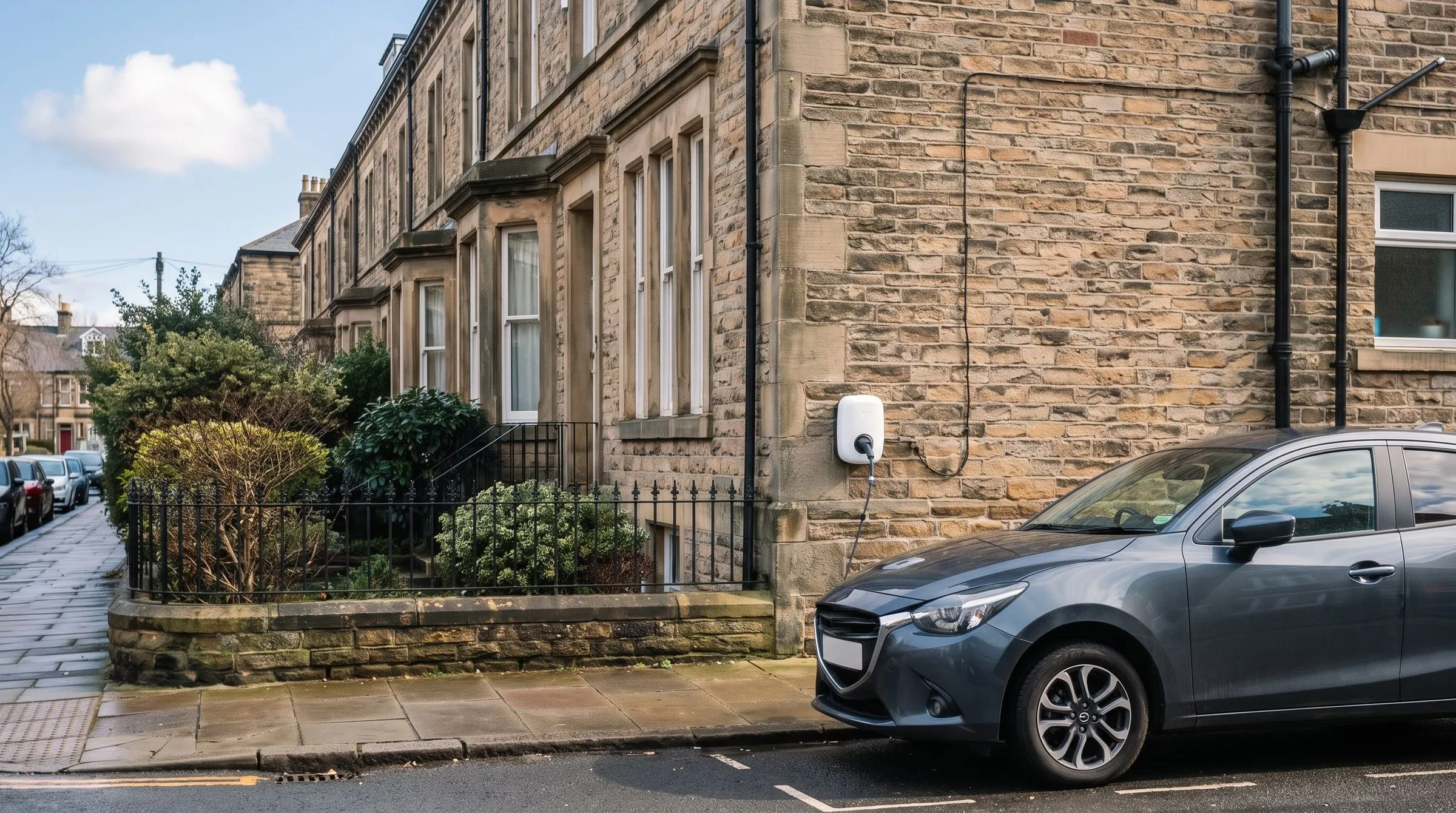 Harrogate
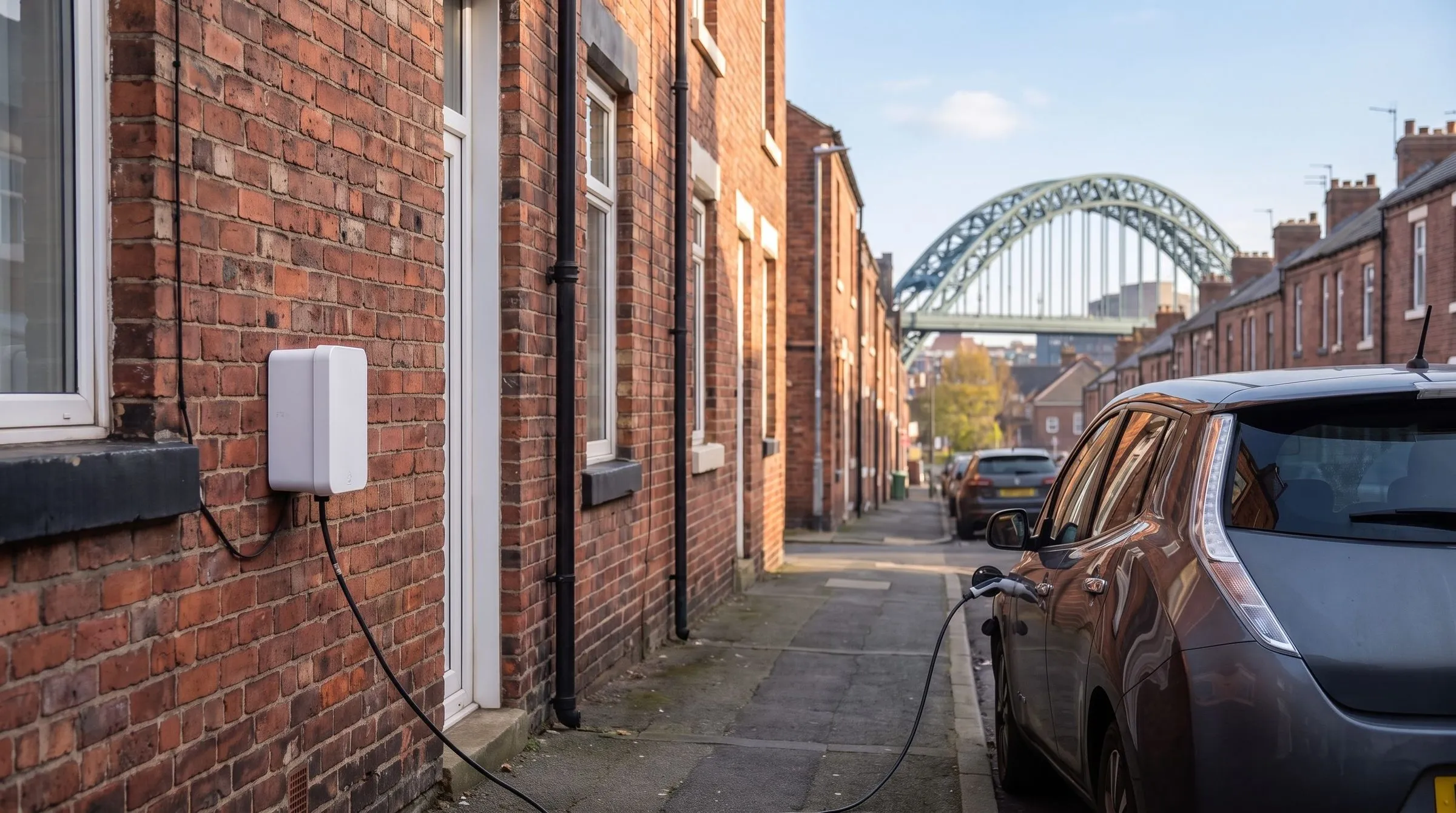 Newcastle
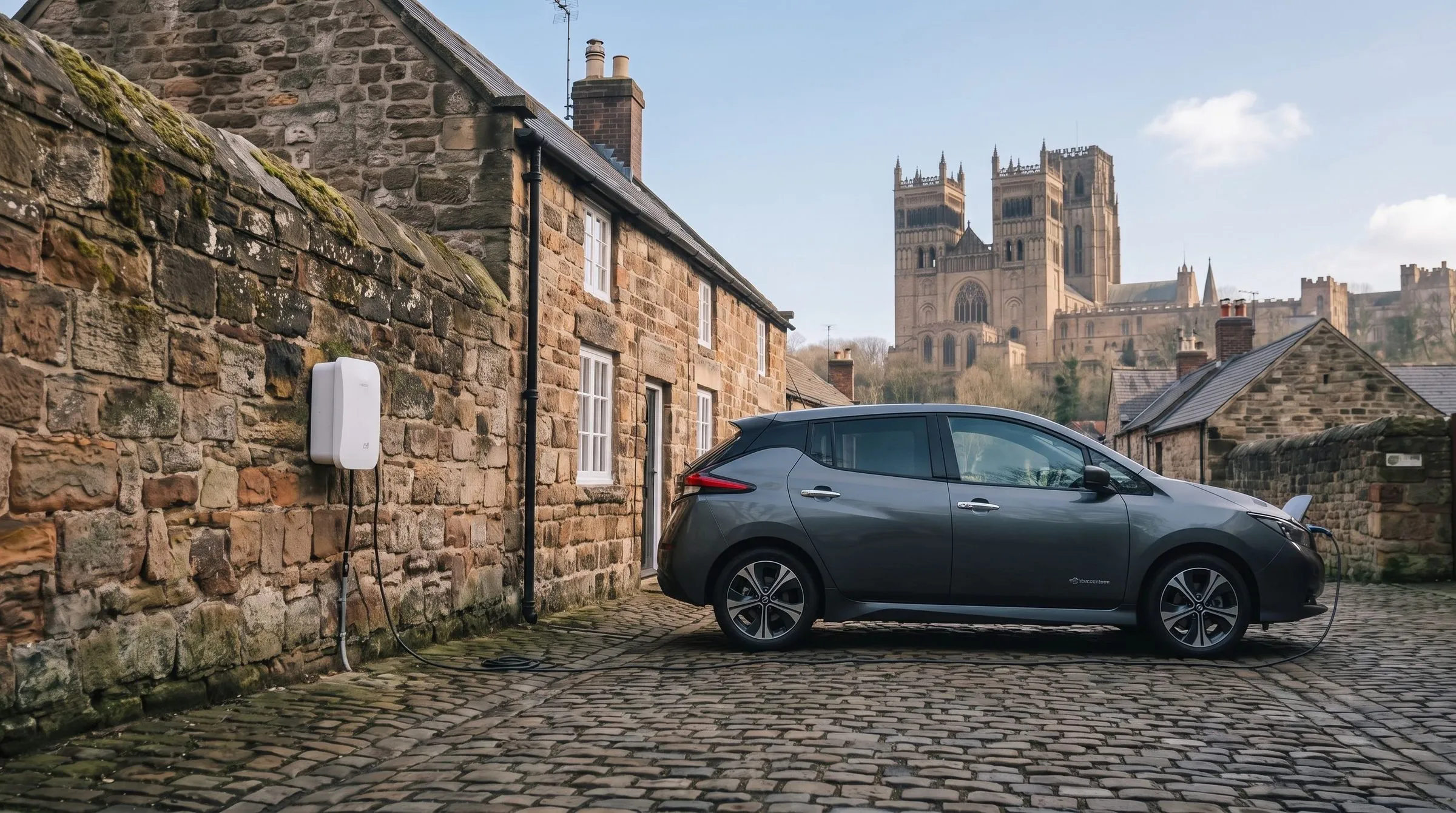 Durham
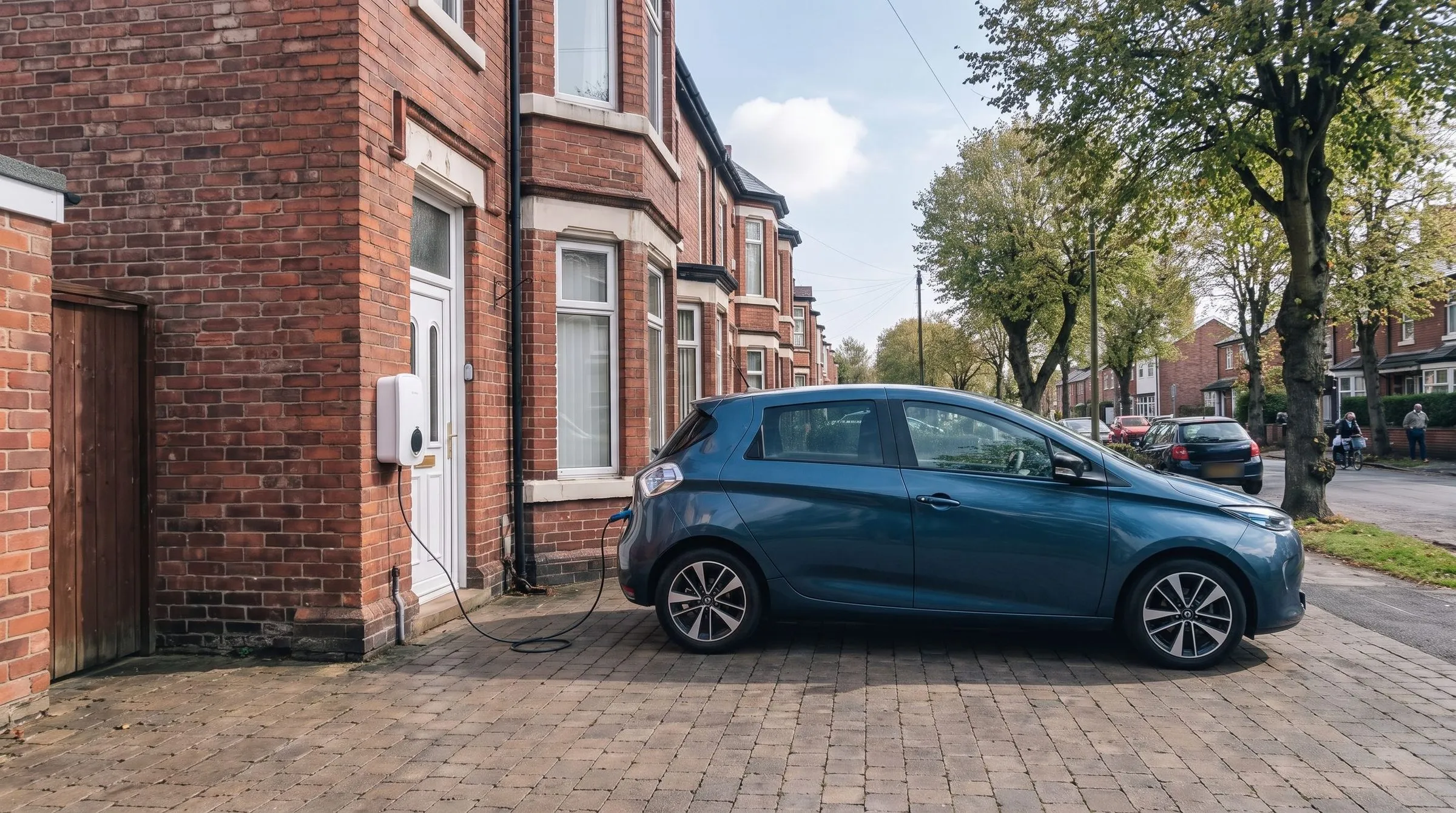 Darlington
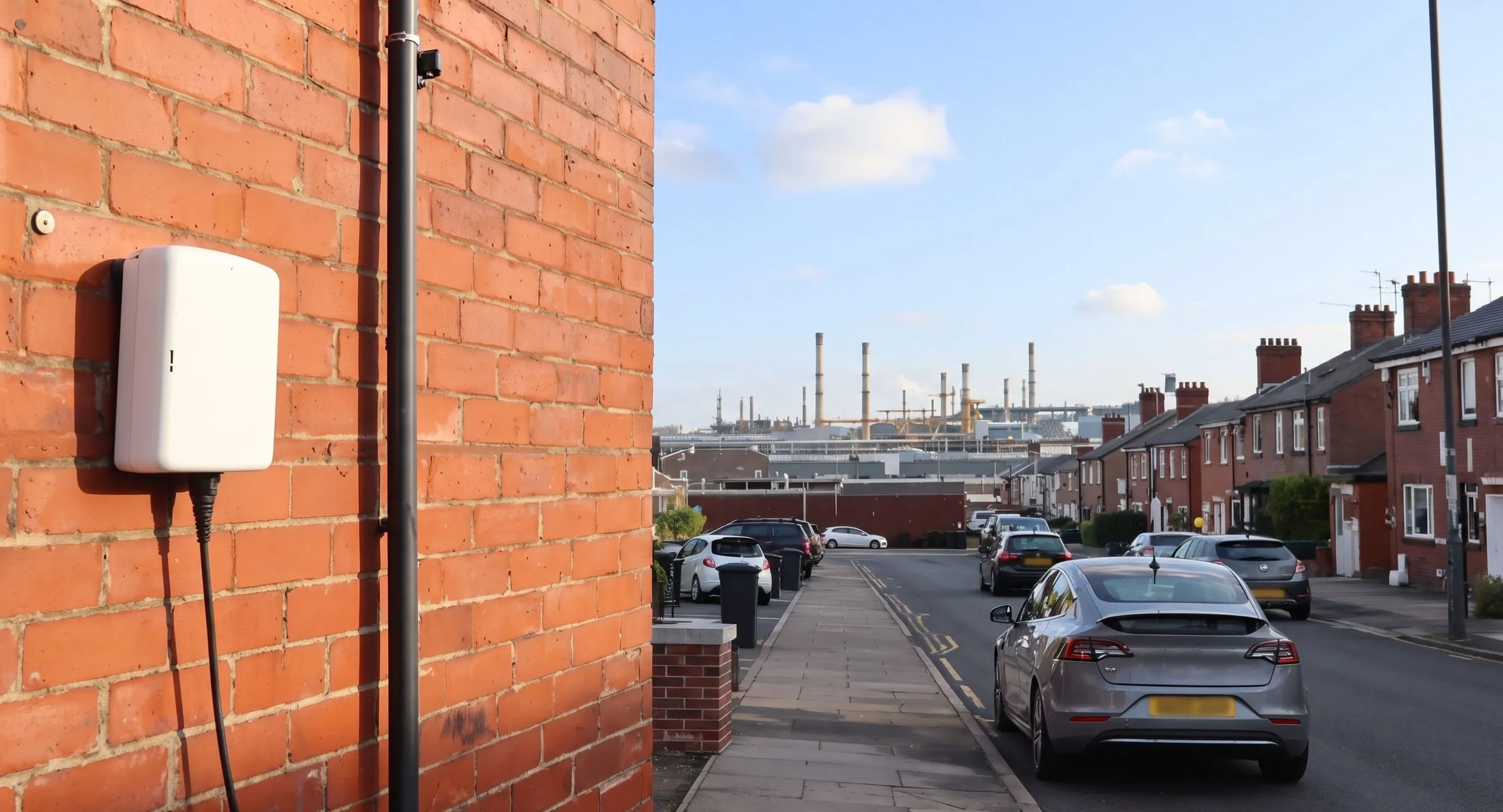 Middlesbrough
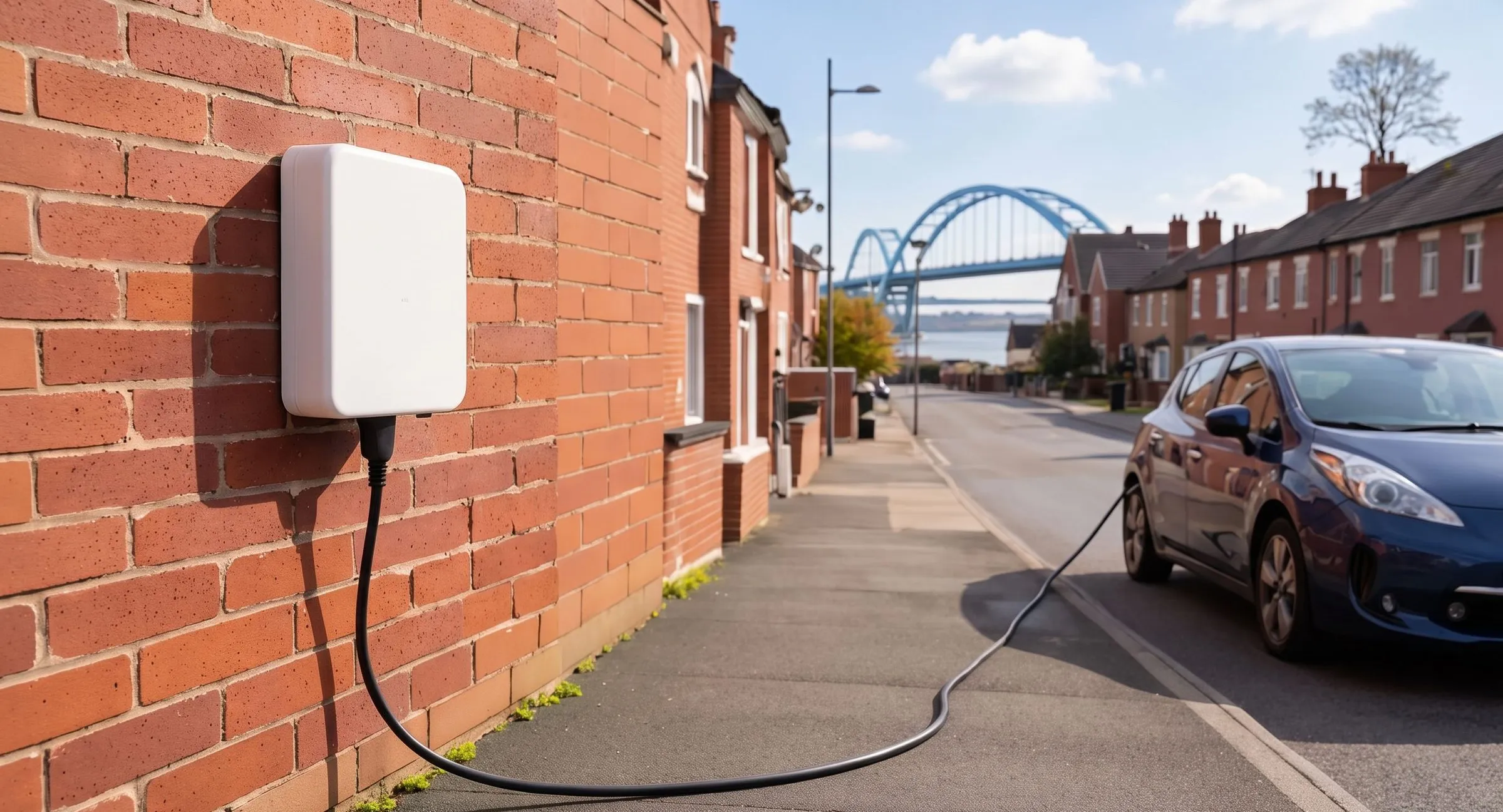 Stockton-on-Tees
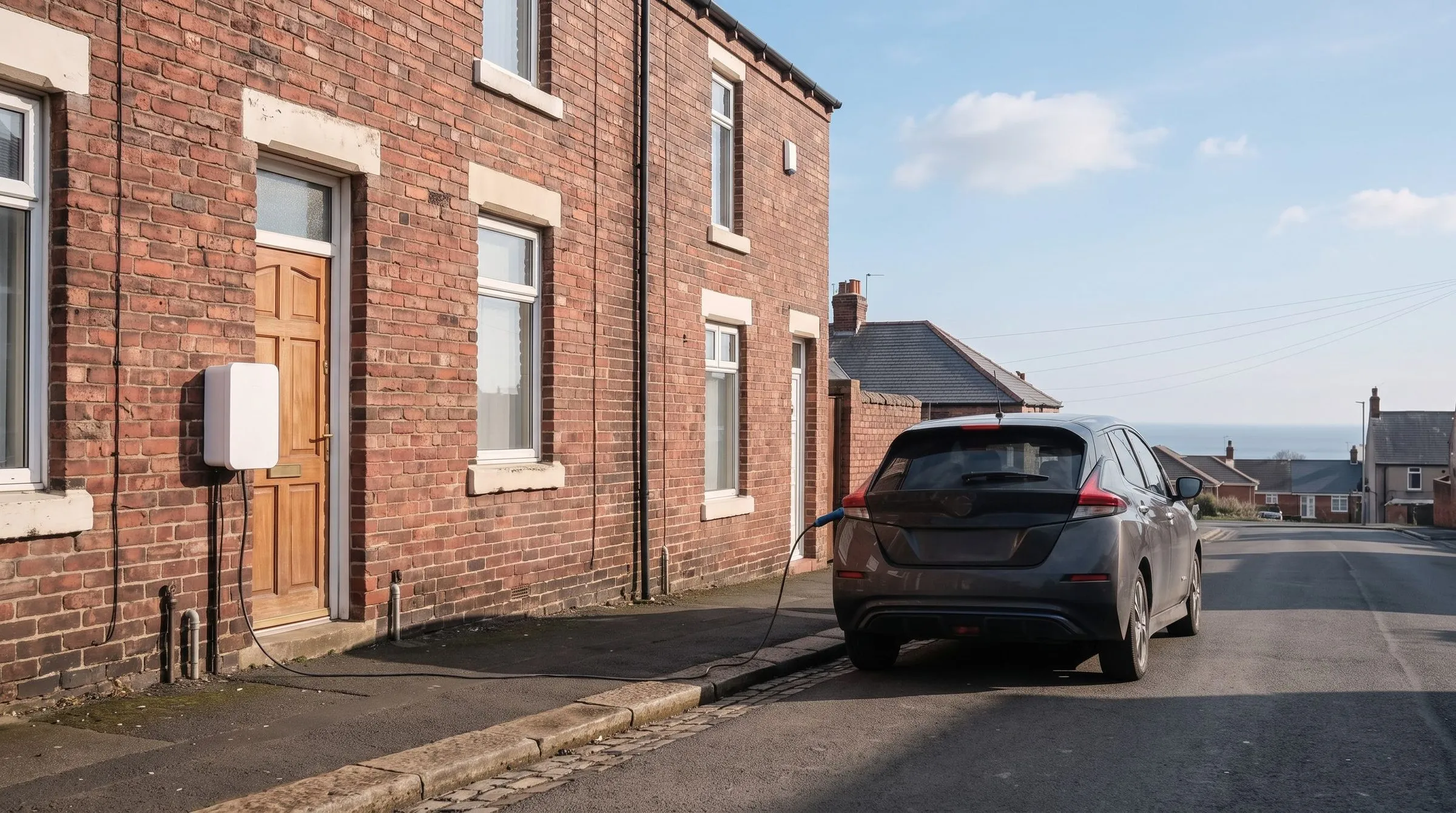 Sunderland
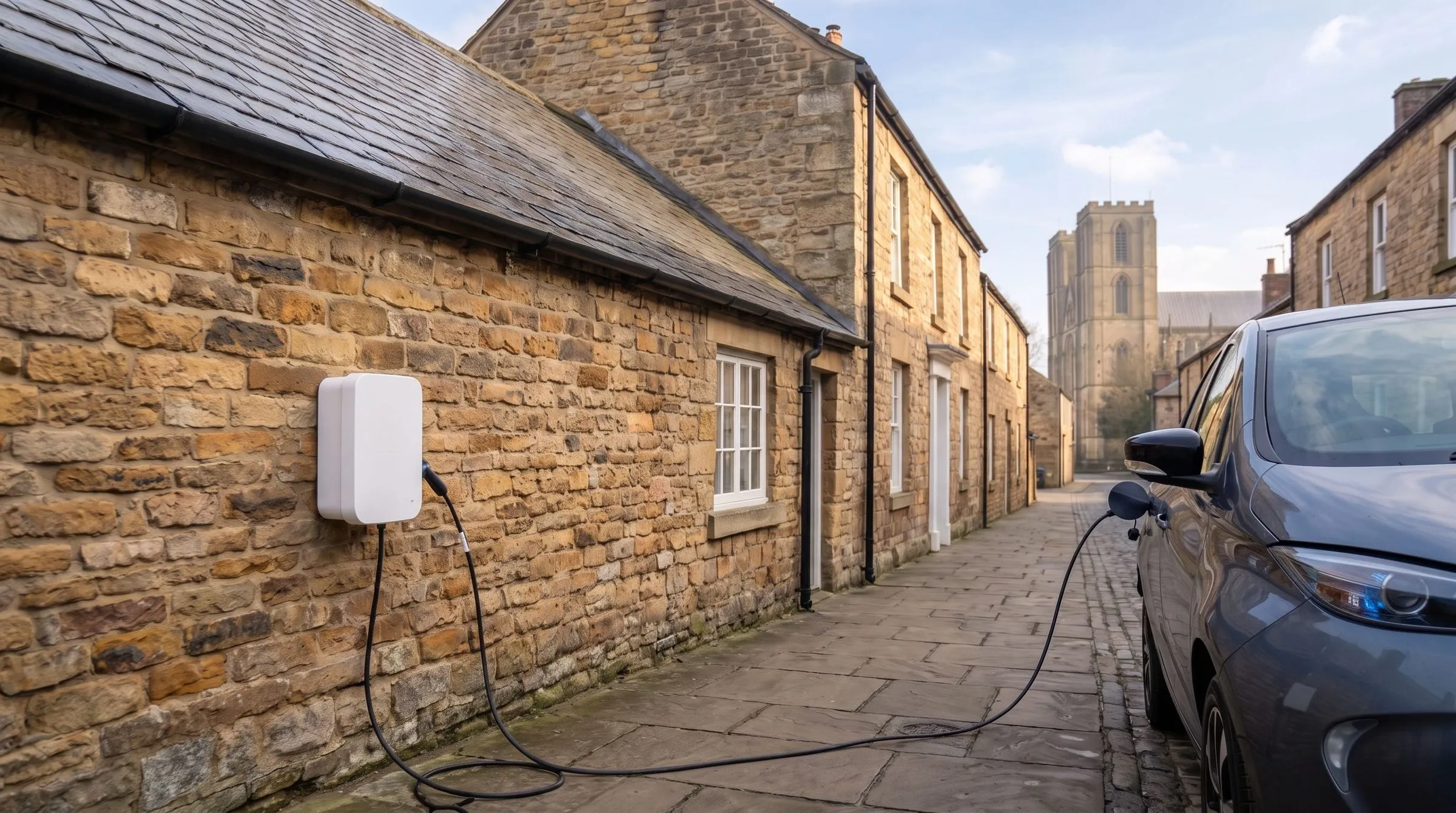 Ripon
- See all areasNorthallerton, Thirsk, Hartlepool and the villages betweenAll areas ›
Also covering Northallerton, Thirsk, Richmond, Scarborough, Whitby, Gateshead, Hartlepool and the towns and villages in between.
See if your street suits a channel
Send photos of your parking and pavement. We check your council’s rules first and, where a channel is allowed, quote a fixed price with the application included.
Get an instant quoteGot a driveway after all?
A standard home installation is simpler and starts at £916 fully fitted.
Home EV charger installationCross-pavement charging questions
What is cross-pavement EV charging?
A cross-pavement channel is a narrow tray cut flush into the pavement between your home and the kerb. Your charging cable lies inside it, under a safe cover, so you can charge from your own electricity supply while parking on the street. No trailing cable, no public charger prices.
Can you charge an electric car at a terraced house?
Often, but it depends on your council. Where channels are allowed, your charger goes on the front wall, the cable runs through a flush channel in the pavement to the kerb, and you charge overnight on a home tariff. In our area that currently means Sunderland, with schemes in progress in Durham and Newcastle, while York, Harrogate, Darlington and Redcar don't allow them. If you park in a rear yard or off a back lane, a charger can usually go there instead, with no pavement involved.
Do I need council permission for a cross-pavement channel?
Yes. The pavement belongs to the highways authority, so a channel needs their approval, and it has to be in place before the grant application goes in. Policies vary a lot between councils, and several in our area don’t allow channels at all, so we check yours before quoting and prepare the application where one is possible.
Does the £500 grant cover the channel as well as the charger?
No, and it is worth being clear about. The on-street EV chargepoint grant pays 75% of the charger and its installation up to £500. The channel itself and any council fee are quoted separately and are not grant-funded. On our prices that means the charger comes down to £416–£642 fitted, with the channel on top.
What does a cross-pavement installation cost?
The charger side is the same fixed price as any home install, £916–£1,142 fully fitted, with the £500 grant taken off for on-street households. The channel depends on your pavement width, the cable route inside your home and your council’s process, so we don’t publish a single figure. Send photos through the quote form and you get one fixed price covering the channel, the charger, the council application and all certification.
Is the channel safe for pedestrians, prams and wheelchairs?
Yes. The channel sits flush with the pavement surface, and the cable lies below it under a cover, so there is nothing to trip on. When you are not charging, the pavement looks and behaves like any other. That safety case is why the councils that allow channels approve them.
What if someone else parks outside my house?
A channel doesn’t reserve the space, and we’re honest about that. In practice most households park close enough most of the time for the cable to reach, and some councils will consider bay markings separately. We’ll give you a straight answer about your street at the survey.
Can I just use a cable mat over the pavement instead?
Temporary mats and covers exist, but most councils don’t permit them on public pavements because they still present a trip risk, and the grant specifically excludes them. A flush channel is the approach highways teams approve, and it keeps the pavement clear when you’re not charging.
Is the on-street grant still available?
Yes. The grant for households with on-street parking rose from £350 to £500 on 1 April 2026 and is funded until 31 March 2027. The separate £25 million fund that helped English councils install channels in 2025–26 has closed, but that was council money, not yours: your grant is unaffected.