
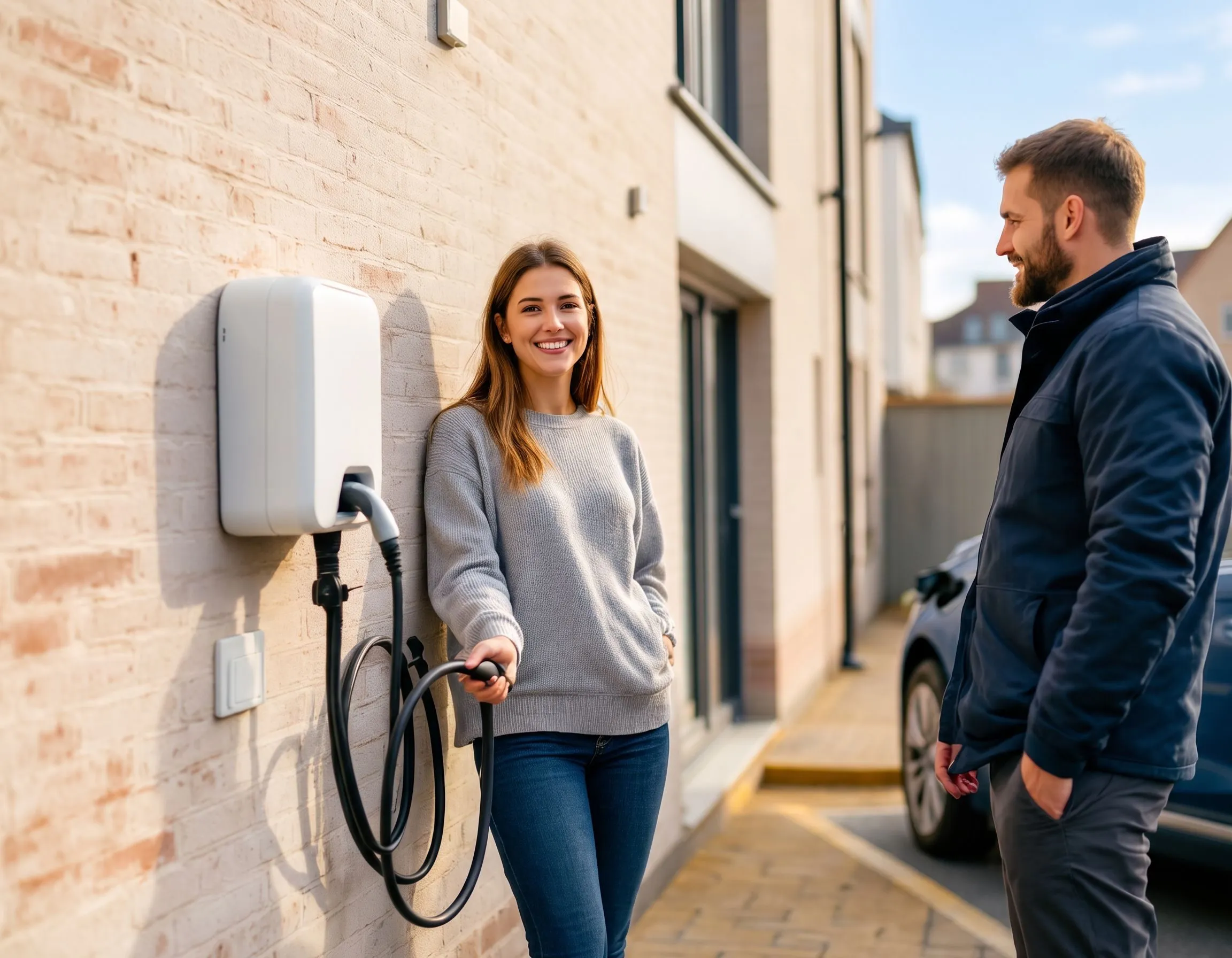
EV chargepoint grant: £500 off for renters and flat owners
The EV chargepoint grant is the government's home EV charger grant: 75% of the installation up to £500 if you rent, own a flat or park on the street. We check you qualify and deduct it from your quote, so there is nothing to claim back.
Own a house with a driveway? This grant isn't for you
The EV chargepoint grant used to cover every homeowner. It closed to owner-occupiers of houses in April 2022 and it hasn't reopened. If that's you, there is no home grant to claim, and anyone telling you otherwise is out of date.
What you do get is a fixed, fully-fitted price from £916 with nothing added on the day. And if you run a business from home, the Workplace Charging Scheme can still take £500 off a charger on your own driveway.
Who qualifies for the EV chargepoint grant
The scheme now targets people who can't easily get a charger any other way: renters, flat owners and households without a driveway.
You can claim if
- You rent your home, whether a house or a flat
- You own and live in a flat
- You have no off-street parking and will use a cross-pavement charging channel
- You own an eligible electric or plug-in hybrid vehicle, lease one for at least six months, use one as a work vehicle, or have one on order
- The charger is fitted by an OZEV-authorised installer, like us
You can't claim if
- You own and live in a house with a driveway or garage (the grant closed to you in April 2022)
- A grant has already been claimed for a charger at the same property
- Your vehicle is not on the government’s eligible list
- The charger was installed before your application was approved
What the EV chargepoint grant covers
The grant pays 75% of the cost of buying and installing a home charger, capped at £500. Because our fitted prices are above the cap, you get the full £500: an Easee One installation at £916 becomes £416, and a myenergi Zappi at £1,142 becomes £642.
It covers a smart charger, up to 5 metres of cabling, a dedicated protected circuit, NICEIC certification and DNO notification. The same finished job as every install we do, with the grant already off the invoice.
See what a home installation includes ›No driveway? Cross-pavement charging qualifies
The grant was extended to households without off-street parking who charge through a flush channel cut into the pavement. You park on the street, the cable runs safely under the surface, and you charge on your own home tariff instead of paying public rates. Councils decide whether channels are allowed, and several in our area don't, so we check yours first. Where it's allowed, we handle the application, the channel and the charger as one job, with the £500 deducted.
How we claim the grant for you
We check at quote stage
Your quote form answers tell us which scheme applies to your home, business or school, and your fixed quote comes back with the grant shown. No research needed on your side.
You apply, we do the paperwork
The schemes need the application to come from you, with our dated quote attached. It is a short online form, we walk you through it, and once it is approved we book the install.
The grant comes off your invoice
After the install we submit the claim as your OZEV-authorised installer. The grant is paid to us, so you only ever pay the price with it already deducted.
See if you qualify
The quote form asks whether you rent, own a flat or park on the street. Your fixed price comes back with the grant already deducted.
Get an instant quoteLandlord rather than tenant?
There is a separate £500 grant for landlords fitting chargers at rental properties.
Landlord EV charger grantEV chargepoint grant questions
Who qualifies for the £500 EV chargepoint grant?
You likely qualify if you rent your home, own a flat, or have no off-street parking and use a cross-pavement charging solution. You also need an eligible electric or plug-in hybrid vehicle, and the charger must be fitted by an OZEV-approved installer like us.
I own a house with a driveway. Can I get the EV chargepoint grant?
No. The scheme closed to owner-occupiers of houses in April 2022 and hasn't reopened. Our fixed fitted prices start at £916 with nothing added on the day. If you run a business from home, though, you may be able to claim £500 through the Workplace Charging Scheme instead, and that is worth checking.
How much is the EV chargepoint grant worth?
It covers 75% of the cost of buying and installing the charger, capped at £500. On our fitted prices that means the full £500 comes off, taking an Easee One installation from £916 to £416. The cap rose from £350 to £500 on 1 April 2026.
Do I apply, or does the installer?
You do, and we help. You get our dated quote first, then submit a short online application with it attached, along with proof of your tenancy or flat ownership and your vehicle. Once approved we install and submit the claim, and the grant is paid to us, so you only pay the price with it already deducted. It cannot be claimed for a charger that is already installed.
I rent. Do I need my landlord’s permission?
Yes, you need written permission from your landlord to have a charger installed, because it is a change to the property. Most landlords agree readily: a charge point makes the property easier to let. If your landlord would rather claim the grant themselves, there is a separate landlord grant for that.
I have no driveway. Can I still get the grant?
Yes, if you use a cross-pavement charging channel. The grant was extended to on-street households who charge through a flush channel in the pavement, so you get £500 off the charger and home-tariff charging on a terraced street. We handle the council application as part of the job.
Is the grant per person or per property?
One socket per resident, at the property you live in. If a previous occupant claimed a grant for a charger at your address, a second claim is not possible. We check this at quote stage so there are no surprises.
Has the EV chargepoint grant changed recently?
Yes. On 1 April 2026 the maximum rose from £350 to £500 per socket and applications moved to a new online platform. The scheme is funded until 31 March 2027. The rules here were checked in September 2026, and we confirm the current position for your address when we prepare your quote.