
How to apply for a Workplace Charging Scheme voucher in 2026
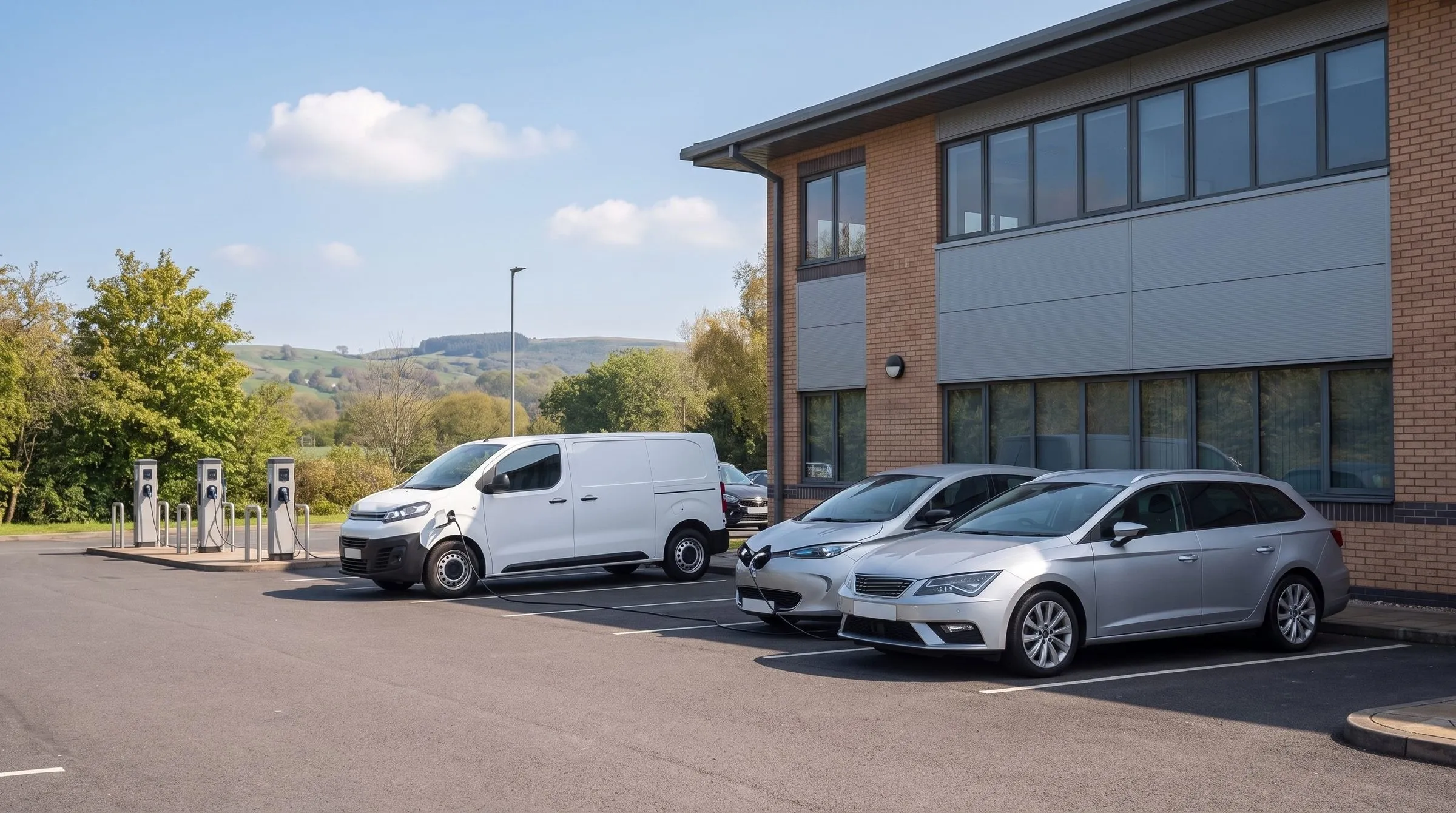
A Workplace Charging Scheme voucher is how a business, charity or public body gets up to £500 per socket off EV chargers at its premises. You apply online, the voucher arrives by email within 5 working days, and your installer then has 180 days to fit the chargers and claim the grant.
We fit workplace chargers across North Yorkshire and the North East and claim the grant for our customers. Every rule below was checked against the government’s own guidance on 7 October 2026.
What is a Workplace Charging Scheme voucher?
A Workplace Charging Scheme (WCS) voucher is a code the government emails you once your application is approved. It confirms the sites and number of chargepoint sockets the grant covers, and it’s worth up to 75% of the cost, capped at £500 per socket.
You give the code to your installer, who takes the grant off your invoice and claims it back. Our Workplace Charging Scheme guide covers who the scheme is for; this post is about getting the voucher.
What’s changed in 2026, and why some guides are out of date
A lot of what ranks for this topic was written for older versions of the scheme. These are the current rules:
- £500 per socket. The maximum rose from £350 on 1 April 2026, for installations completed on or after that date.
- A final year. The scheme has been extended until 31 March 2027.
- 180-day vouchers. Some guides still say 120 days.
- A £315,000 subsidy limit. The minimal financial assistance cap is £315,000 over 3 financial years, not the older £200,000 figure some guides quote.
- The infrastructure grant has gone. The staff and fleets grant for groundworks closed to applications on 31 March 2026.
One quirk to be aware of: at the time of writing, gov.uk’s ‘Apply for an electric vehicle chargepoint grant for your workplace’ start page still shows £350 per socket. The scheme guidance, updated on 1 April 2026, confirms £500 for installations completed from that date.
Check you can apply
Your organisation
The scheme is open to businesses, including small accommodation businesses, charities and public sector organisations. Your organisation has to be based in England, Wales, Scotland or Northern Ireland.
Your site
- You own the property, or the landlord has agreed to the chargers.
- The site has dedicated off-road parking clearly associated with the premises, with the landowner’s permission if it isn’t yours.
- If you’re a business, the chargers are for staff or fleet vehicles, not customers. You can let local residents use them outside working hours.
- If you’re a public authority, charity or small accommodation business, anyone can use the parking: customers, guests and visitors included.
Some sites aren’t eligible at all: parking that hasn’t been built yet, parking solely for customers, and an address that has already claimed under the WCS or its predecessors.
Chargers you’re legally required to install don’t qualify either. That covers building regulations (Part S in England, since 15 June 2022) and planning conditions that mandate chargepoints.
Your limits
You can claim for up to 40 sockets across all your sites, including anything claimed on earlier vouchers. You also mustn’t go over £315,000 of minimal financial assistance in the current and previous 2 financial years, though public authorities don’t have to make that declaration.
What you need before you start
You’ll need one of these to apply:
- your Companies House number
- your VAT registration number
- a business (non-domestic) rates bill from your council
Charities can upload their Charity Commission registration instead. NHS surgeries and independent schools have their own alternatives, and have to apply from an email address on their organisation’s domain.
You’ll also need a site survey. The guidance says you should have your site surveyed by an installer before you apply, and it’s how you know how many sockets to put on the application.
On bigger sites in our area, that survey includes checking what your supply can take, so we can raise anything with Northern Powergrid, the local network operator, before the work is booked.
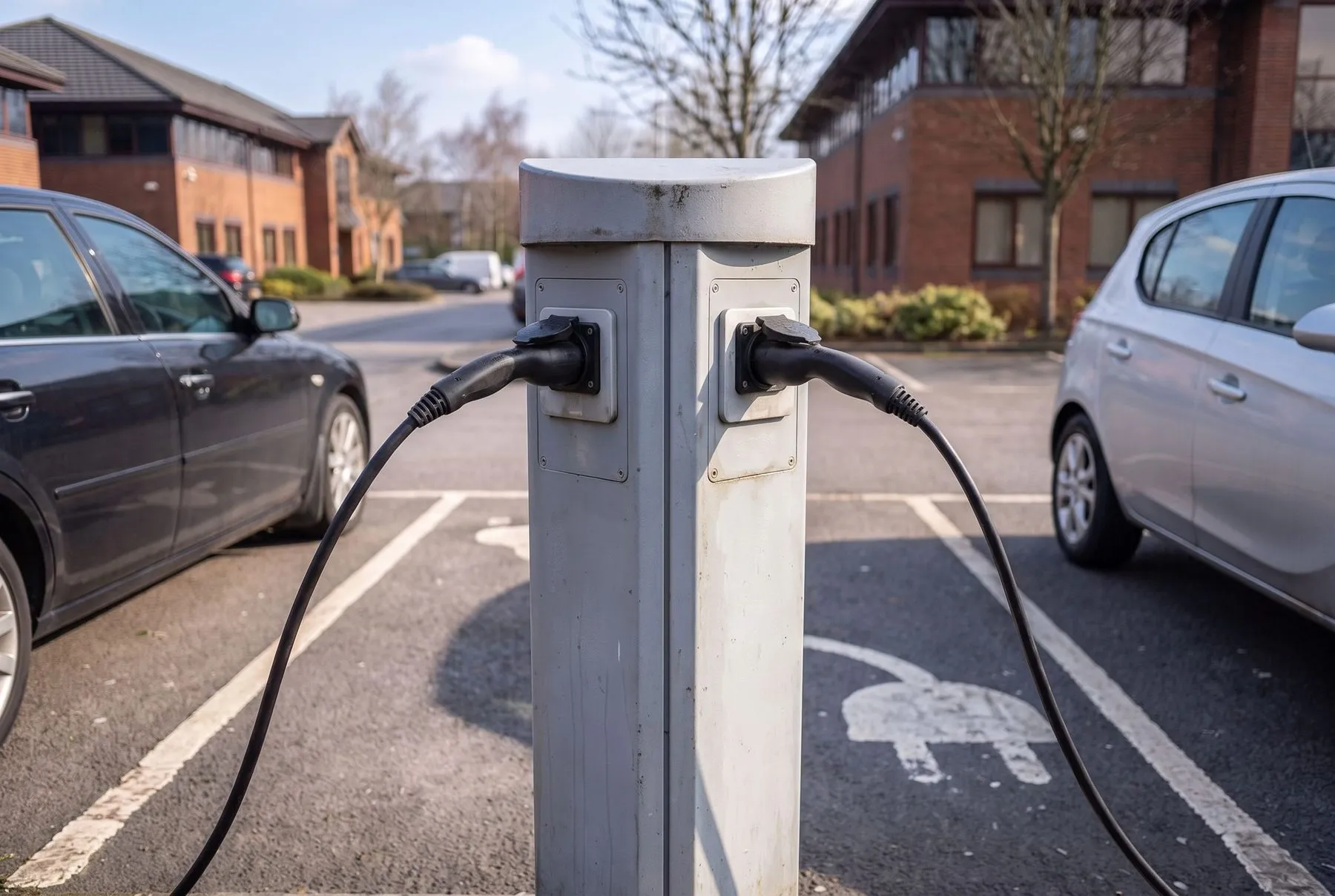
How to apply, step by step
- Get a survey and quote from an OZEV-authorised installer.
- Apply online using the Workplace Charging Scheme application form. If you can’t use the online service, there’s a downloadable form you email to the DVLA.
- Receive your voucher by email within 5 working days. It lists your sites, the number of sockets and the expiry date.
- Give the code to your installer, who checks it’s valid.
- Book the installation. Approved commercial chargepoints are fitted and the grant is deducted from your invoice. The process runs voucher first, installation second.
- Your installer claims the grant using the voucher code and photos of each chargepoint showing the model, the serial number and the parking space it serves.
The 180-day deadline
The voucher is valid for 180 days from the date it’s issued, and the chargers have to be installed and the grant claimed within that time.
If you can’t finish in time, email workplacechargingscheme@dvla.gov.uk to withdraw the voucher and reapply. Vouchers can’t be transferred, and you can’t change the site on one either: a new site means a new application.
If some chargers are done by the deadline and others aren’t, your installer claims the finished ones and you reapply for the rest. Anything installed before the new voucher arrives won’t be covered.
The simple way to avoid all of this is to apply once the survey is done and the install date is realistic, not before.
Working from home? You can still apply
If your home is your main place of work, you can apply as long as the address is listed as your place of business with Companies House, or recorded on your business rates bill. You also need off-road parking.
The charger has to be fitted by an authorised installer and be a model approved for both residential and commercial use. Choose a residential-only model and the claim will be declined.
That opens the scheme up to a lot of rural businesses in North Yorkshire: a farm office, a trade business run from home, or a holiday let business, which counts as a small accommodation business.
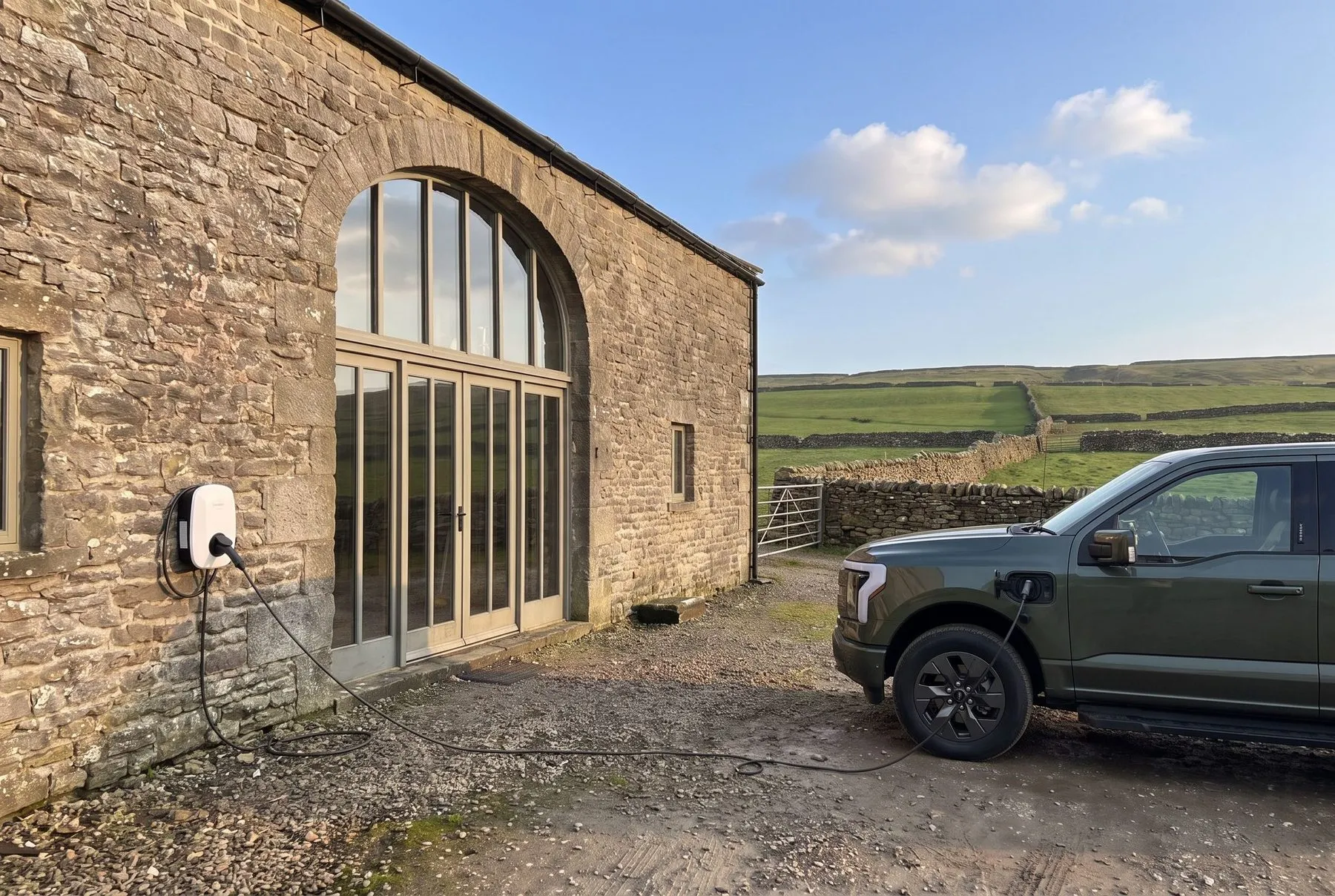
Employers can also fit chargers at employees’ homes for company vehicles, where the employee can’t charge at work. You’ll need to give the DVLA a letter confirming they work for you and have agreed to the installation.
How much is a voucher worth? Worked examples
| Site | Sockets | Grant up to |
|---|---|---|
| Home-based business, one single-socket charger | 1 | £500 |
| Office car park, three twin-socket chargers | 6 | £3,000 |
| Two depots, ten twin-socket chargers at each | 40 | £20,000 |
Each figure is also capped at 75% of the total cost, including VAT. On a smaller job that percentage cap can bite before the per-socket one.
State-funded schools, academies and colleges apply under a separate version of the scheme, worth up to £2,000 per socket. See our school EV charging page for how that works.
What trips businesses up
- Customer-only parking. For businesses, chargers have to serve staff or fleet parking.
- The wrong charger at a home-based business. It has to be approved for commercial use as well as residential.
- Missing the 180 days. The voucher can’t be extended, only withdrawn and replaced.
- An address that has claimed before, under the WCS or the older home charging schemes.
- Chargers that were required anyway by building regulations or a planning condition.
- Changing the site after the voucher is issued.
If your application is turned down
You can appeal by emailing the DVLA at workplacechargingscheme@dvla.gov.uk. A manager reviews the case, and that decision is final.
For questions before you apply, you can ask your installer, email the same address, or phone 0300 123 1343, Monday to Friday, 9am to midday.
After the installation
If a chargepoint has to be removed or taken out of use within 3 years, you have to tell the DVLA, and the grant may be reclaimed. OZEV also audits a sample of installations, which can include a site visit.
None of that is a reason to hold back. It just means fitting chargers where they’ll stay, which is what the survey is for.
If you’re weighing up chargers for staff or vans, our EV chargers for business page covers how we design and install them. Send us photos of your car park through the quote form and you’ll get a fixed price with the grant already taken off.